Imagine that you are a teenager the first time you miss school because of your period. Your mom says, “I was the same way. Take a Midol” Your doctor hands you a heating pad recommendation and a prescription for ibuprofen. You learn, quickly, that this is just the way it’s going to be. That women grit through those days of the month while functioning in everyday life.
Now picture yourself ten years later, still doing the same thing, except now you’re a mother, an entrepreneur, career woman, homemaker, still soaking through pads and passing clots doubled over in pain. The only difference is that you are now responsible for other people, projects, deadlines, and a home.
This is the story of un-recognized adenomyosis.
Adenomyosis affects roughly 1 in 5 people with a uterus. Most wait years, sometimes over a decade, before getting a diagnosis.
As providers and as women, we have both the opportunity and the responsibility to change the conversation. This article is for the nurses, midwives, and clinicians who sit across from patients describing pain that’s been minimized before. It is also for any woman reading this who’s ever felt that the pain or heavy bleeding has been minimized.
So What Actually Is Adenomyosis?
Adenomyosis happens when the tissue that normally lines the inside of the uterus, called the endometrium, starts growing where it does not belong: inside the muscular wall of the uterus itself. That wall is called the myometrium, and it is not designed to house endometrial tissue, so to speak.
Each month, when hormones signal the body to prepare for a potential pregnancy, all of that endometrial tissue responds. It thickens and eventually breaks down and bleeds. When that tissue is inside the uterine cavity, that blood becomes a period if the body is hitting a peak in ovulation. When it is embedded in the muscle–there is nowhere for it to go.
Over time, it becomes enlarged and heavy, tender to the touch, and chronically inflamed.
It’s important to know that Adenomyosis can show up in a few different ways so let’s talk about them. It can be diffuse, meaning the tissue is spread throughout the uterine muscle. It can be focal, clustered in one area. It can also form as an adenomyoma, a nodular mass that looks a lot like a fibroid on imaging and can be easy to miss or misidentify. It also can exist along with endometriosis and uterine fibroids, which adds another dynamic of complexity to diagnosis.
What It Actually Feels Like
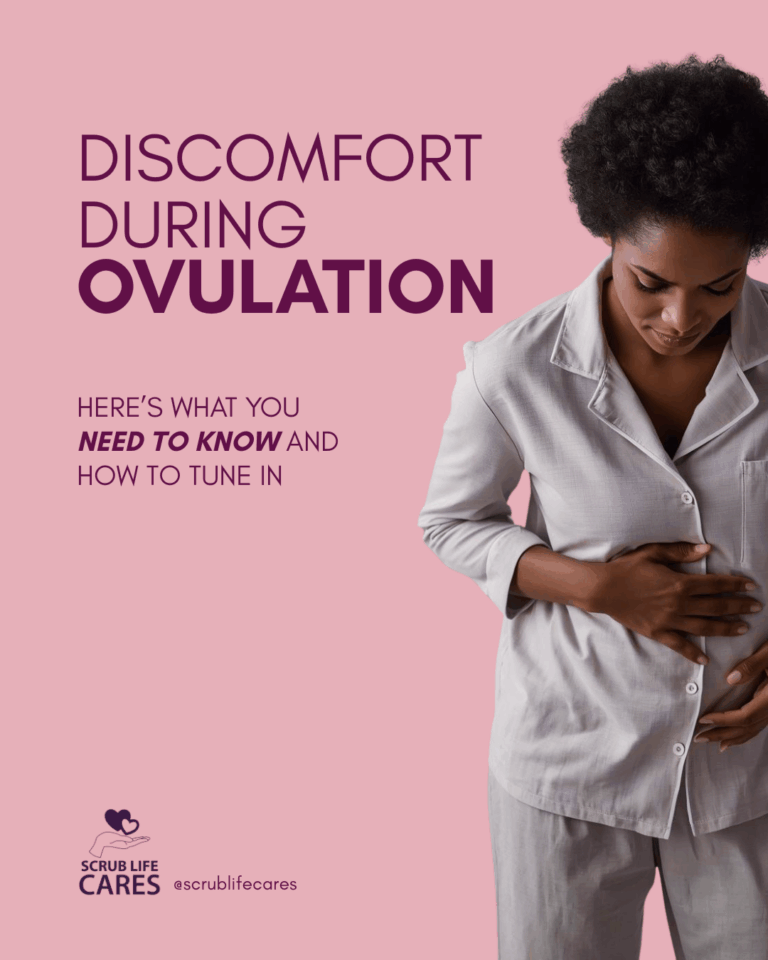
The textbook symptoms are heavy menstrual bleeding and painful periods, but if you ask someone who actually lives with it, the picture is very broad and more complex than that.
Here is what patients commonly experience:
- Periods so heavy that soaking through a pad or tampon every hour or two is a regular occurrence
- Cramping so severe that over-the-counter pain relievers barely touch it
- Periods that last longer than seven days, sometimes dragging into week two
- Large clots that are alarming to see and exhausting to manage
- Pelvic pressure or a constant sense of heaviness, not just around their period but throughout the month
- Pain during sex, particularly with deeper penetration
- Spotting between periods
- Fatigue that goes well beyond “tired”—because chronic blood loss causes anemia
- Bladder pressure or needing to pee more frequently when the uterus is significantly enlarged
What is important for providers to understand is that these symptoms are not separate inconveniences. They holistically describe a person’s quality of life because there are women who are planning their lives around this time of the month.
When a patient describes pain that Motrin cannot touch, it’s important that we consider this data.
Why Does It Take So Long to Get a Diagnosis?
This is one of the most important questions we can ask, because the average diagnostic delay for adenomyosis is five to ten years from the time symptoms begin.
Part of that is due to the fact that Adenomyosis can only be definitively confirmed through pathologic examination of uterine tissue, which historically meant waiting until hysterectomy. In recent years, high-resolution transvaginal ultrasound and MRI have become much more reliable for clinical diagnosis, but only from experienced providers. Imaging signs like an enlarged, globular uterus, asymmetric myometrial thickening, and subendometrial cysts can point strongly toward adenomyosis, but providers have to be looking for them.
But the bigger part of the delay is culture and the collective habit in medicine and in everyday life that menstrual pain is something women are supposed to live with. It is the provider who moves on when a patient mentions heavy periods. It’s a reflection of a medical system that has historically neglected women’s health reproductive research.
What You Can Ask Your Providers to Do:
This requires intentional listening and the willingness to treat menstrual symptoms the same way we treat any other symptom, with curiosity and clinical weight.
Some practical shifts that make a real difference:
- Explain your menstrual history and highlight patterns you’ve recognized.
- Start charting your cycle and document heavy bleeding days with specificity. “Soaked through x amount of pads in x amount of hours”.
- Explicitly explain if and when pain medication is not helping the pain.
- Request imaging options.
What Treatment Can Look Like
There is no single cure for adenomyosis, and it is important for patients to know that upfront so they can make informed decisions rather than feel like they keep failing treatment. Hysterectomy remains the definitive resolution for those who have completed childbearing, but it is far from the only option, and it is not the right fit for everyone.
For women who want to manage symptoms and preserve the uterus, the current documented options include:
- Hormonal contraceptives, both combined and progestin-only, to reduce the cyclical hormonal stimulation driving symptoms
- The levonorgestrel IUD, which has solid evidence for reducing adenomyosis-related bleeding and pain and is often a first-line recommendation
- NSAIDs for acute pain management, ideally started a day or two before the period begins
- Uterine artery embolization or adenomyomectomy for focal disease in patients who want to avoid hysterectomy
Believing Women
Adenomyosis is real, and so is the pain, the experience, the bleeding, and the struggle with a constellation of symptoms.
For providers reading this: you do not need to be a gynecologic specialist to make an impact. Ask questions, get curious, and help patients dig deep to acknowledge their menstrual history — it may be the first time anyone has.
For patients reading this: if this description sounds like your life, you are not being dramatic, and you are not alone. Bring this article to your next appointment if it helps you find the words.
This is exactly the kind of story Scrub Life Cares exists to tell. If this piece resonated with you, we’d love to hear your story, have you follow along for more content like this, or support the work we do to get women’s pain taken seriously. Share your story. Support our mission and follow us on social media.
Resources Worth Sharing With Patients
- Barbados Association of Endometriosis and PCOS ( endoandpcosbb.com)- advocacy, education, and provider resources
- St. Vincent and The Grenadines Association of Endometriosis, Adenomyosis and PCOS- advocacy, education
- Endometriosis Foundation of America (endofound.org) — advocacy, education, and provider directories
- ACOG Patient FAQ on Adenomyosis (acog.org) — clear, accessible overview for patients
- The Nancy’s Nook Endometriosis Education Group — peer-led Facebook community with vetted provider lists
- Iodine and Hormone Health by Lara Briden, ND — evidence-informed resource on menstrual health literacy