Hi everyone,
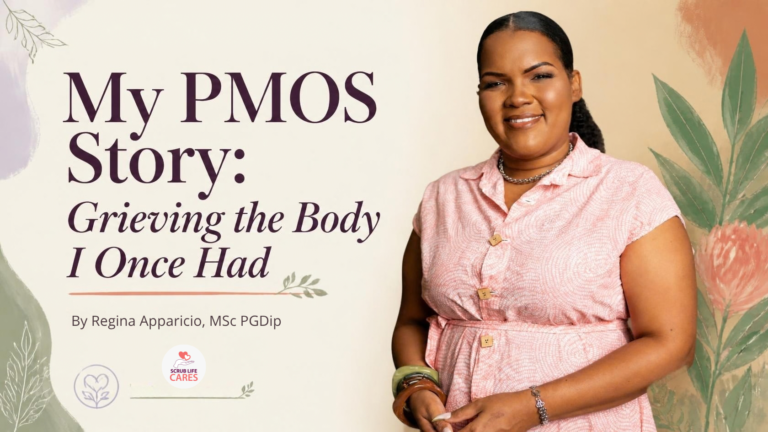
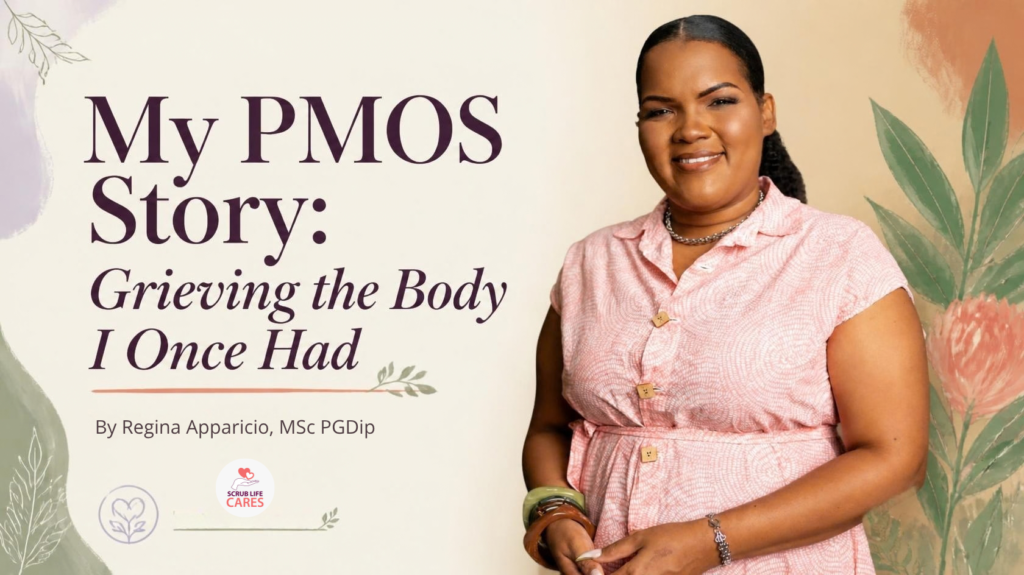
My name is Regina Apparicio. I am the Mental Health Director of Scrub Life Cares and a mental health advocate. My passion for women’s health issues stems from my own personal experience with PMOS (formerly known as PCOS).
Symptoms that caught my attention began showing up two years before my formal diagnosis. In hindsight, however, I believe signs like hirsutism and midsection weight gain had been present since I was a teenager. They were manageable or dormant until life’s demands exceeded my coping capacity. I never had issues with missed periods that were alarming per se; I ate whatever I wanted, whenever I wanted, and always prided myself on having a sweet tooth.
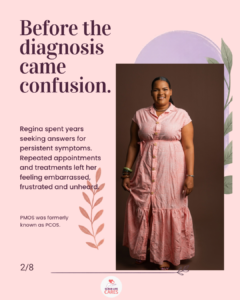
The most troublesome symptom, though, was a chronic, stubborn yeast infection that retreated only temporarily whenever I used over-the-counter medications. Visiting my gynecologist felt like spinning through a revolving door. I thought it was a medical issue requiring medical treatment, but every time a course ended, I was left feeling broken, confused, and lost. I didn’t know what was happening, and I felt too embarrassed to talk about it with anyone beyond a doctor. I bounced between gynecologists and my primary care physician, racking up bills and collecting missed diagnoses.
I knew deep down that the treatments offered weren’t resolving what I was experiencing. On one visit for an unrelated issue, a doctor asked, “Do you have PCOS?” I vividly recall the look of disdain directed at my body weight, combined with the condescending suggestion that I needed to lose weight. I left that office with medication usually prescribed for asthma. To be honest, I rejected all of their advice—both related and unrelated to my visit—because I hated how I was made to feel.
During my last medical visit before pursuing studies abroad, I was told, “Well, your body is acting like you are diabetic when you are not,” right after I aced a routine blood sugar test. That was my breaking point. I gave up.
I walked away from a stressful job, an unsupportive relationship, and the comfort of home to pursue my master’s degree with limited finances. Looking back, adjusting to these major life decisions placed insurmountable pressure on my body. Yet, I needed to escape, and I knew how to do so through what I loved most: studying mental health.
Once abroad, new respiratory issues emerged that failed to respond to Western medicine. I was told I was allergic to most things in my environment and was offered Eastern medicine as an alternative to help manage my symptoms.
Then, during a routine Pap smear in Jamaica, my doctor startled me by examining my cervix and noting that it was inflamed. I was terrified because I didn’t know what that meant. Fortunately, she was reassuring, outlining next steps that included a pelvic ultrasound and blood tests to verify my blood sugar and testosterone levels. She was confident I had PCOS based on visible physical signs, but she needed lab confirmation. I felt a mixture of emotions, with relief taking the lead because I finally had an answer that made sense.
When the blood tests returned positive for cysts, elevated androgens, and blood sugar issues, I was immediately placed on metformin and offered weight management options. I thought, Yes, I can do this. But I wasn’t prepared for what followed. The moment I went online, the very first word that popped up was “infertility.”
It crushed me. My future goals were built around establishing my career first and starting a family later. I thought, What kind of woman would I be if I couldn’t bear a child? As a result, I began to hate my body.
The hate parade continued as I experienced more debilitating symptoms—primarily severe fatigue that struck at random, and hair loss. My stress mounted as ongoing medical follow-ups drained my student budget. As a “strong, independent woman” (or so I thought), asking for help did not come easily. Looking back, I can truly say I faced depression in all its glory. I was grieving, and I was angry: at doctors for not identifying it sooner, at God, at my DNA, and at myself for some perceived sin that I thought caused this karma. I didn’t have the words to describe the pain, but I was hurting and isolated. I wanted to separate myself from a body I viewed as a threat to my goals.
Yet, I can’t point to a single moment that sparked the shift when I finally began to pick myself back up. Truthfully, I didn’t do it alone. It took every conversation with my doctor, the support of my community, searching for information online, and finding others who shared my experience. First, I had to accept the diagnosis and the help being offered; then, I had to accept what it meant for my life and how to manage living with it (a struggle I still navigate to this day). Acceptance became a journey in its own right.
My biggest hurdle at the time was navigating the strict dietary adjustments recommended online. You can’t easily tell a foodie like me to give up West Indian cuisine for a quinoa salad, keto, or Mediterranean diet, especially when I found comfort and identity in the way I ate. Moreover, the gastrointestinal side effects from my medication were embarrassing, particularly in social settings.
I went back online for answers and stumbled upon content from another West Indian woman—a health coach who shared adaptable ways of managing the condition while staying true to our culture. I shared this with my flatmate, who not only encouraged me but helped me cook meals during periods of intense academic stress. Having a variety of gluten-free and dairy-free options that still felt like home put me in a good place. The medication side effects eased, and I began functioning better with every adjustment. I started reading food labels when shopping and proudly making better choices. As I felt better, I stopped fearing that I was missing out.
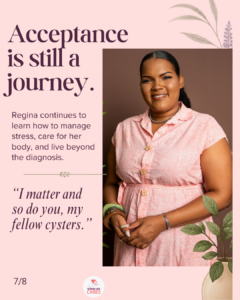
Eventually, I started seeing a functional medical doctor, adopting a philosophy of “eating close to the earth” to guide my lifestyle and since then I have been in a good place of acceptance. There are days when I give in to my sweet tooth and there are days when I successfully offer to my body what it needs. I feel a positive difference now by not letting the diagnosis of PMOS define me. In fact, this very condition helped me to take care of the vessel that I had been neglecting, that is my body, by being careful about how I manage stress and care for me. I matter and so do you, my fellow cysters. Happy PMOS Awareness Month!
Regina Apparicio MSc PGDip