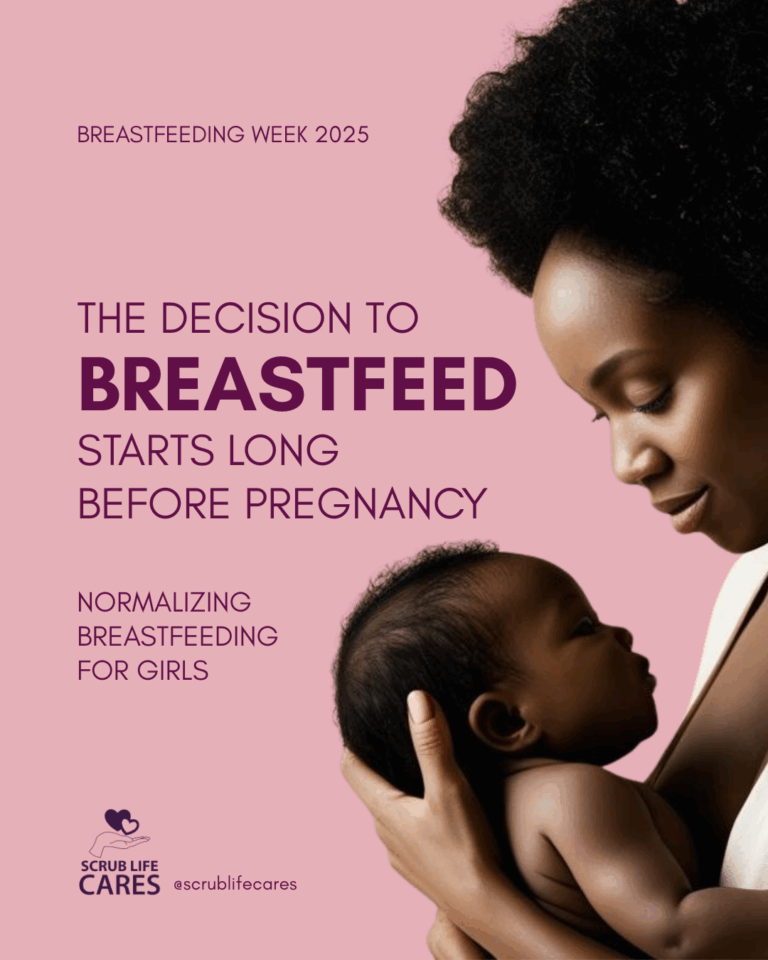
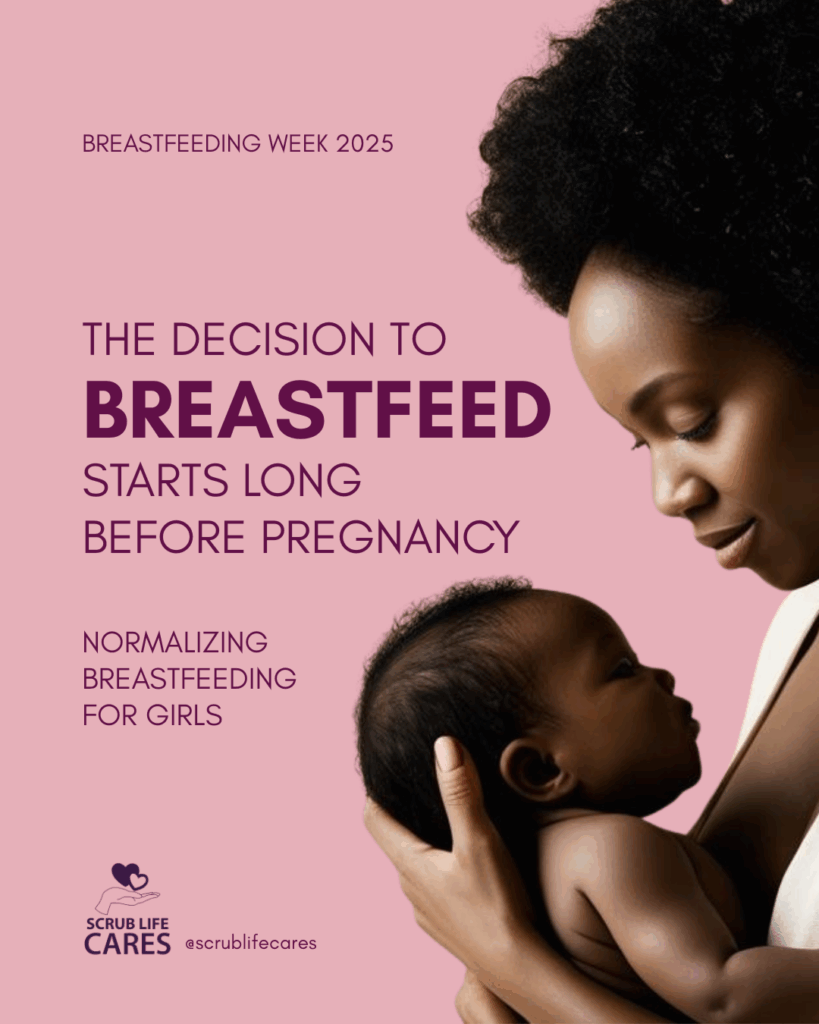
At Scrub Life Cares, our mission is rooted in health equity, cultural pride, and generational healing. As we honor World Breastfeeding Week, we’re lifting up a conversation that too often gets left behind: how we talk to young girls, especially Black and Brown girls, about breastfeeding—and how early exposure can shape a future of empowerment rather than shame.
Because the truth is: the decision to breastfeed doesn’t begin at the birth of the baby, not even during pregnancy. It begins long before.
When Girls See Themselves in the Story of Nourishment
Breastfeeding is more than a feeding choice. It’s a cultural practice, a source of connection and empowerment, and in many communities of color, a silent revolution against historic oppression.
When a young Black or Brown girl never sees women who look like her breastfeeding, never hears it affirmed in her culture, it teaches her to feel disconnected from a practice that is, by nature, quite intimate and quietly powerful.
At Scrub Life Cares, we believe in shifting the conversation, starting early to encourage young girls to see their bodies as multi-functional masterpieces. We can start this conversation in our homes, with extended family, and in schools by providing accessible education and support. We can maintain dignity, culture, and pride through providing tools for success.
Body Literacy as Reclamation
Breastfeeding is a biological norm across various cultures, but for Black and Brown communities, it’s also a cultural reclamation. Teaching girls early about the way their bodies work, the way breasts are made to feed, despite worldly objectification, is a radical act of body literacy. We know now body literacy is the root of all decisions we make as women.
We want girls to grow up knowing:
- Breastfeeding is powerful
- Your body was created to communicate signals that we are meant to listen and respond to.
- You get to decide how to nourish your babies. Not cultural norms or societal narratives.
This is more than anatomy. It’s identity. It’s a legacy. And it’s liberation.
Representation Matters
Programs, facilities, healthcare systems, and literature can all do a better job of diversifying images for breastfeeding education and women’s health promotion. We can work together by:
- Sharing images of Black and Brown mothers confidently breastfeeding
- Teaching history that includes Indigenous, African, and Latina breastfeeding traditions
- Creating safe spaces and helping girls identify safe people for them to ask questions about their bodies
- Reinforcing body autonomy and dignity from a young age
We don’t want to wait to introduce the concept of breastfeeding; it is not a separate conversation from menstruation, reproductive health, and pregnancy. They’re all one and the same, which is a great reminder for us to begin now. Begin education through story sharing, language, exposure, and other ways that highlight breastfeeding is for everyone.
A Future Where Breastfeeding Is Celebrated
When we educate young girls with body literacy, cultural awareness, and empowerment, we do more than prepare them for motherhood; we prepare them to advocate for their health and trust their bodies.
We raise girls who don’t feel embarrassed when they see a mom nursing in public.
We raise girls who choose to breastfeed not because they were told to, but because they saw it as a biological norm that comes along with a clear understanding of body awareness.
We raise girls who know their bodies belong to them.
Scrub Life Cares Is Here to Change the Conversation
This World Breastfeeding Week, we’re inviting parents, clinicians, educators, and community leaders to center awareness and education in the conversation. When we normalize breastfeeding early, we empower the next generation of mothers to reclaim what has always been theirs: nourishment, connection, and power to feed the generations to come.
Want to be part of a movement?
Follow Scrub Life Cares to access our culturally competent resources on body literacy, maternal health, and community healing.